This post may contain affiliate links. Please read our disclosure policy.
On Sunday you helped your child clean their room. You could see the floor. The laundry was in a basket. You may even have stood in the doorway for a moment and admired your work. By Thursday, the floor has disappeared again. You wonder whether your child remembers any of Sunday at all. Your child, meanwhile, insists they know exactly where their favorite sweatshirt is.
A weekend cleanup can work because you’re there to notice, decide, and keep things moving. Keeping the room usable during the week asks your child to do those jobs again. Start by checking whether belongings have easy-to-reach homes and whether your child knows what to reset—and what help is available.
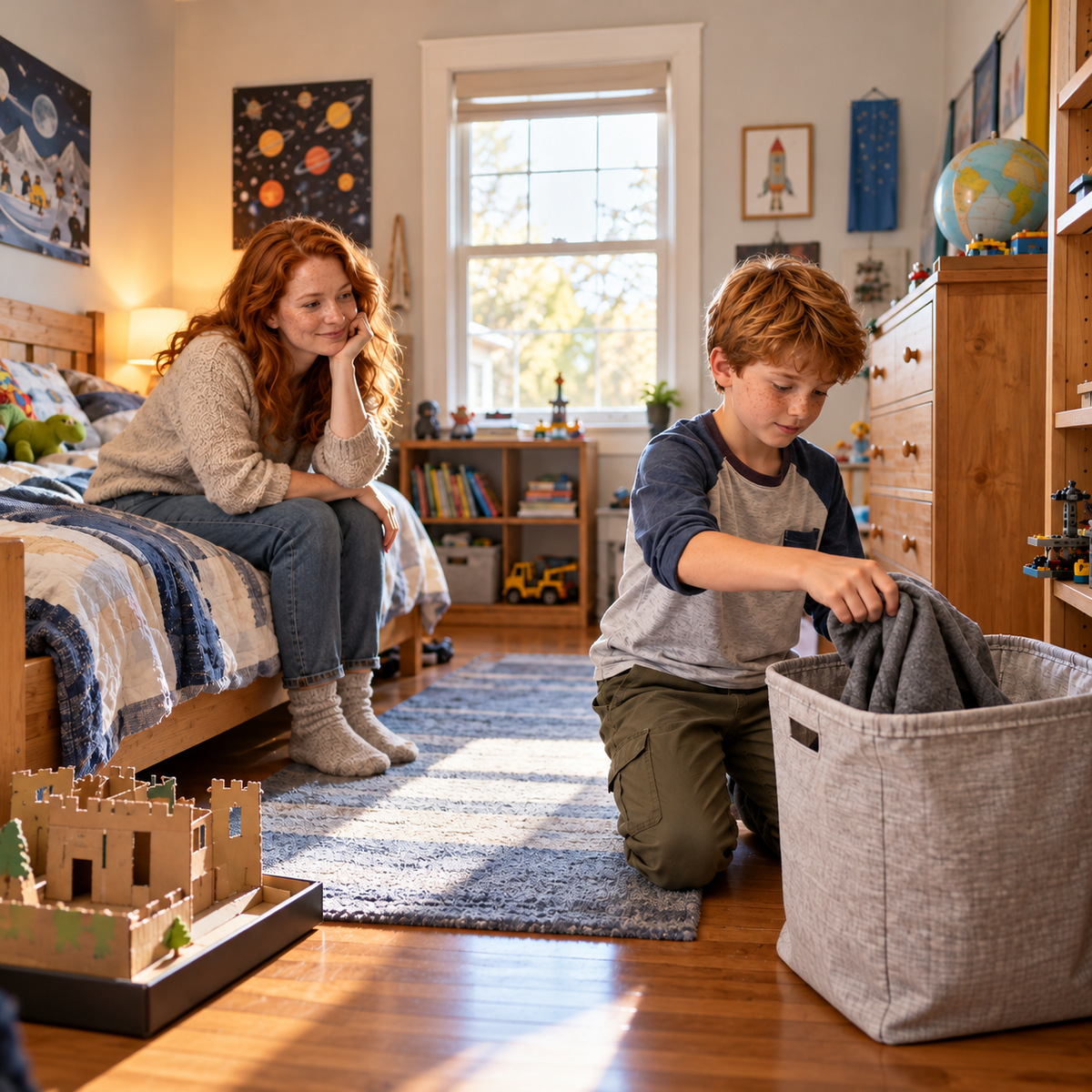
During the week, your child is living a life that contains homework, friends, play, and the occasional urgent need to build something out of cardboard. A room can look lived in and still work well. The question is whether your child can find what they need, use the space safely, and return things with the support available.
Decide what “clean enough” means in your child’s room
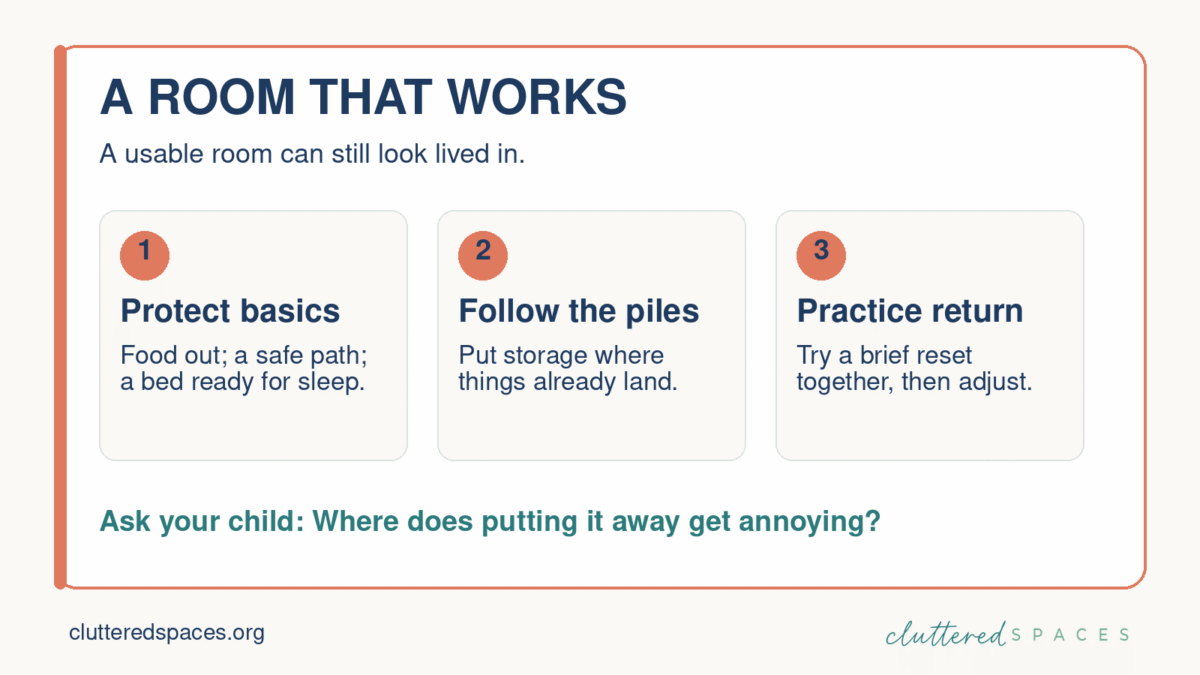
Before you tackle the entire floor, decide what matters most. Is there food that needs to leave? Is the bed available for sleep? Can someone walk safely to the door? Are the dirty clothes contained? Choose a few clear family expectations. “Cups go to the kitchen and dirty clothes go in the hamper before bed” gives a child more to work with than “Keep your room clean.” You can hold firm on hygiene and safety while giving your child some say in how their space looks.
Ask your child where they get stuck. Do they know where art supplies belong? Can they reach the shelf? Is the dresser so full that clean clothes bounce right back out? It is easy to take a pile as evidence that a child does not care, when it may be evidence that the intended destination does not work. If there are simply too many things for the available space, make the choices together. This playful ten-minute method for decluttering with kids can make that conversation smaller and less loaded.
Put storage where your child actually uses it
Notice where the same items land. If clothes come off beside the closet every night, put the hamper there if you can. If books gather by the bed, perhaps a shelf or basket belongs within reach. Current projects may need one tray where they can remain in progress. Carrying each object across the room, opening a lid, and choosing a narrow category adds steps to every put-away. Look together for places to make that easier.
For practical storage examples, Your Modern Family’s guide to organizing kids’ toys shows ways to use reachable shelves and simple bins. Choose the ideas that fit your child and the space you have.
Invite your child to test a few storage spots with you: “Want to see whether these places work for the things you use?” Each of you can put something away and notice what is awkward. Maybe the bin is too high, or “craft supplies” has no clear home. Ask whether they prefer seeing their belongings or having things tucked away. They can point out the problem while you move a basket; this does not need to become a test. Before buying more bins, use the Cluttered Spaces guide to checking whether a home system will work during an ordinary week. It can help you spot steps that depend on someone remembering, prompting, or making every decision.
Give their preferences some room. A child who wants to display a collection or keep a cardboard invention for a while is telling you the room is theirs, not only a cleaning project. You can offer a shelf for the collection or a parking spot for the project. You may still disagree about whether seventeen stuffed animals need the good pillow. At least now you can have a conversation about space instead of repeating “Just put it away.”
Practice a short bedroom reset together
Most children will need practice, especially if the room has been managed by an adult until now. Choose one short reset at a predictable time, perhaps before a favorite Friday activity or after pajamas go on. Do it together at first: food and dishes out, laundry into the hamper, bed or walking path clear. Stop when those essentials are done. Your child can learn the sequence before you expect them to notice every stray item on their own.
Some weeks will be harder. A minimum version might be taking out food and making the path safe. Agree on when to return to the rest: “Tonight we clear the path; Saturday after breakfast we’ll reset the clothes together.” Name who handles the next step, too. Putting clothes in a hamper will not keep working if nobody has room or time to empty it. Decide who starts the laundry and what help is available. If the plan keeps slipping, look at the steps and the demands before asking for more effort.
Try the revised setup for a week. You might need to move the hamper, clear space in a drawer, and practice the reset together; connected problems can need connected changes. At the check-in, ask what each of you found easier and what was still awkward. A Thursday room may still look lived in. Finding clothes, using the bed, moving safely, and having a way back after a difficult week are useful signs of progress.
Cynthia Rusincovitch is a home function and executive function coach and the founder of Cluttered Spaces. She helps families build routines and home systems that fit the people using them.